Readings: Take 2
Welcome to the CineConnections® collection of the latest Readings on the subjects of film and romance on the web, which we are delighted to share with you, the discerning single (or otherwise) cinephile.
Oy vey, The Odyssey…
In the second post for CineConnections’ Readings series, we take the pulse of the culture at large through the lens of love, films, and love of films. And, wow, is there ever a 60-foot animatronic Polyphemus stalking the popular cultural imaginary lately.
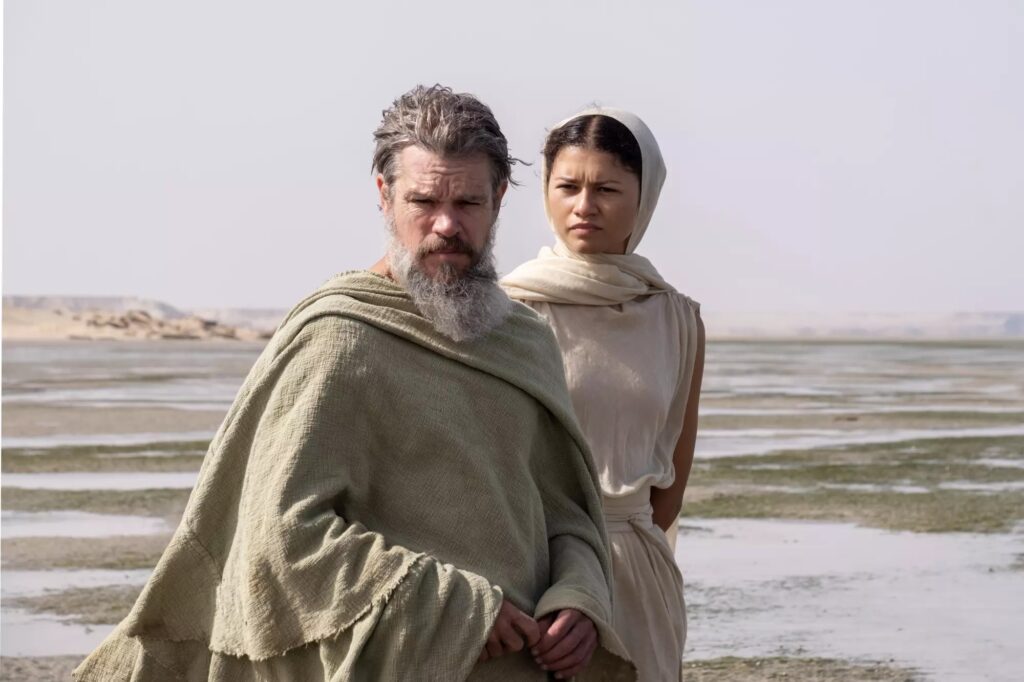
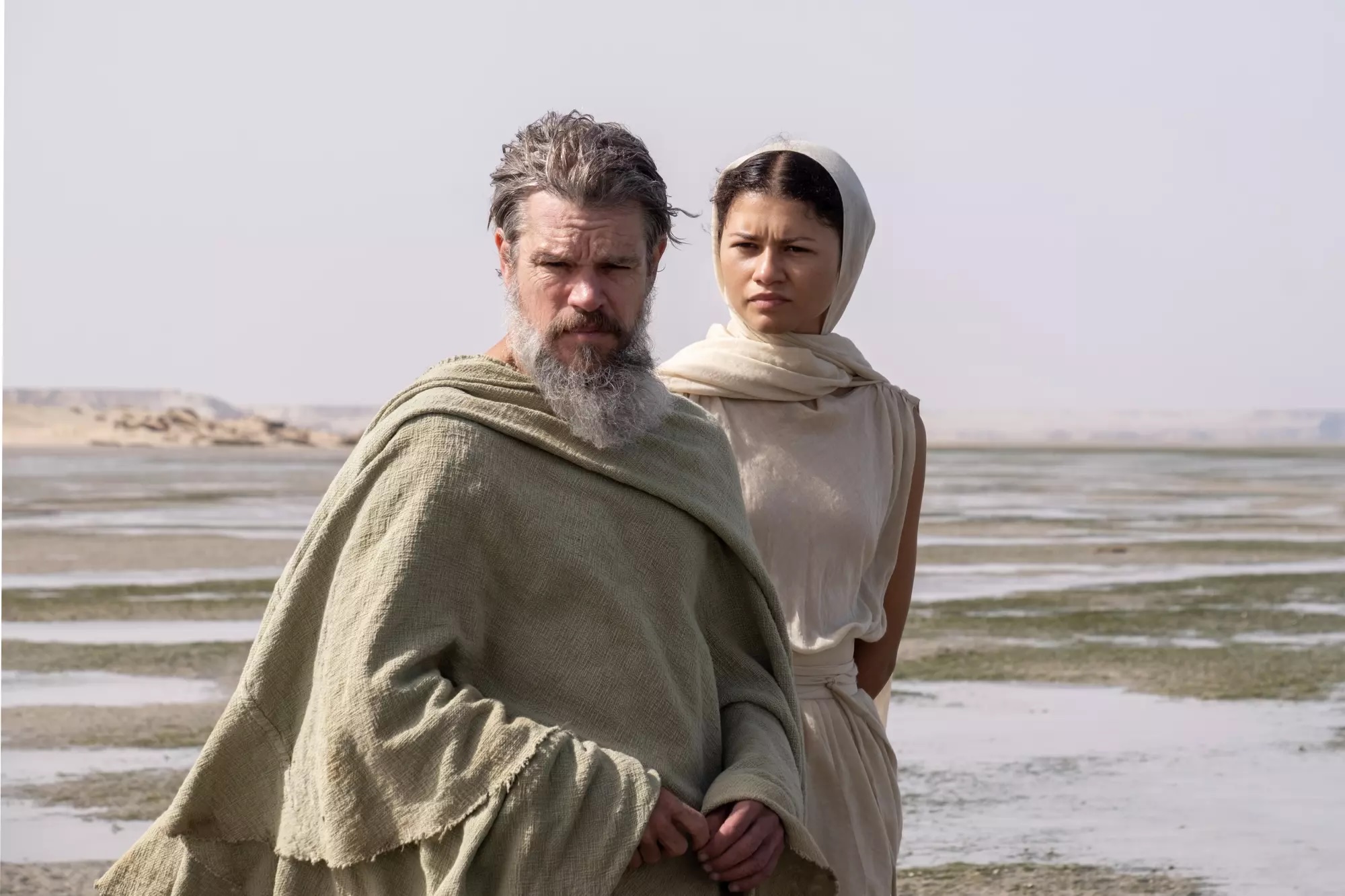
— As your long-distance, multi-level love stories go, Homer’s epic has plenty to offer an engaging filmization. And there seems to be a general consensus that director Christopher Nolan (and, for that matter, IMAX) is(/are), in many ways, well-suited for this new, star-studded, revisionist adaptation, suffused with Nolan’s trademark redemptive cinematic obsessions (and, speaking of cinematic obsessions, FWIW: we’re fans of Andrei Konchalovsky’s quirky miniseries version for NBC from three decades ago, starring a somewhat miscast Armand Assante as Odysseus, but also starring an exceptionally well-cast Greta Scacchi as Penelope, not to mention Vanessa Williams’ Calypso and Michael J. Pollard’s Aeolus (“Who?” we hear you ask about the latter character, as Aeolus is missing from Nolan’s adaptation — perhaps that would have been one windbag master too many?)).
Film critics have lavished the film with considerable praise, with The Odyssey garnering an 88 score at Metacritic, the thinking person’s Rotten Tomatoes. Accolades have been pouring in, from Manohla Dargis’s rave in the New York Times to Matt Zoller Seitz’ four-star review for rogerbert.com, to, quite remarkably, David Walsh’s measured take on this mass-cultural global spectacle for the World Socialist Web Site, remarking that “(p)eople are going to the film in part because it corresponds to how they increasingly feel about the world and about America in particular.” And, for all lovers of the humanities, the news that Gen-Z’s embrace of Nolan’s film has been a “boon to scholarship” can’t help but be encouraging news in these not-exactly-scholarly times.
Still, for an international blockbuster that has raked in well over a billion dollars globally, not everyone’s in love with Nolan’s version (and, TBH, Stavros Halkias’ hot take on this foundational narrative of Western civilization raises a reasonable point: “The Odyssey‘s three years!”). Top of the hater list is Emily Wilson, whose acclaimed 2017 updated translation of the classic was claimed by Nolan as an inspiration for his own take on his screen version. Her majestic takedown of this film and the Nolan aesthetic generally for the London Review of Books is tart, thorough, accurate, and sadly applicable to too much recent Hollywood fare (though, good Lord, Hades hath no fury like a Nolan fanboy scorned: are Ms. Wilson’s critiques well-founded and stoutly reasoned, or is she an (and, Good Lord, we quote) “ungrateful prick,” one who ever so conveniently ended her piece with the phrase “I am grateful”?).
One thing Ms. Wilson’s essay so very obviously does not do is “speak in the crude language of MAGA folks attacking someone with ideas that differ from hers,” as the esteemed writer Joyce Carol Oates avers in a shared post on X . Really, Ms. Oates? Let’s take a sentence or two from Ms. Wilson’s essay at random: “Throughout his wanderings, the uxorious Odysseus clings to a little doll figure, intended to represent his wife (like the spinning top clutched by Leonardo diCaprio in Inception); the real woman is barely more interesting.” “It is bad to fight and kill to accumulate wealth, as Agamemnon does; it is good to fight and kill to preserve the wealth that you have already acquired (even if by war). Any of these moral contradictions could make for an interesting and generative theme in a movie, but Nolan lets the fragments of an incomplete set of big ideas spin around in the epic whirlpool, with no plank of solid, specific human experience to which we might cling.”
Maybe JCO pays more attention to the rhetorical flourish that is MAGA ca. 2026 (it’s like they say “uxorious” and “generative” all the time, are sensitive to contradictions, &c., &c., &c.) than we do, but if calling out, say, the hypocrisy of elites is an instance of crude, haughty superiority, what does that say about The Accursed? Talk about sour notes: separate dismissals of chastity, nodding, enormous pores and a troubling tendency towards empty female characters among many other things notwithstanding, there’s plenty to criticize in Nolan’s work, and every reason to. Ms. Oates, on the other hand, evinces a demonstrable crudity all too redolent of know-nothing MAGA when it comes to her puzzling, inaccurate reduction of Ms. Wilson and her arguments — did she actually read the piece before condemning it? Project much, Joyce Carol Oates?
But we were discussing love…weren’t we? Sure, we were — here are some other recent, notable online reflections on the subjects of romance and cinema:
— Can it be that the Hallmark Channel is only 25 years young? It feels like it’s been with us forever, rather like a small-town holiday Christmas that isn’t what it seems on the surface. The NY Times reflects on “25 Years of Big-City Gals Meeting Hometown Hunks on Hallmark“.
— If you enjoyed the critically-reviled One Night Only (fun fact: Time Magazine‘s Stephanie Zacharek, another Odyssey hater, loved it), JustWatch recommends 5 simliar high-concept romance movies you can watch, out there, on The Streams.
— Over at the Criterion Collection’s blog, Imogen Sara Smith considers classic office romances you can conveniently watch on their namesake Channel.
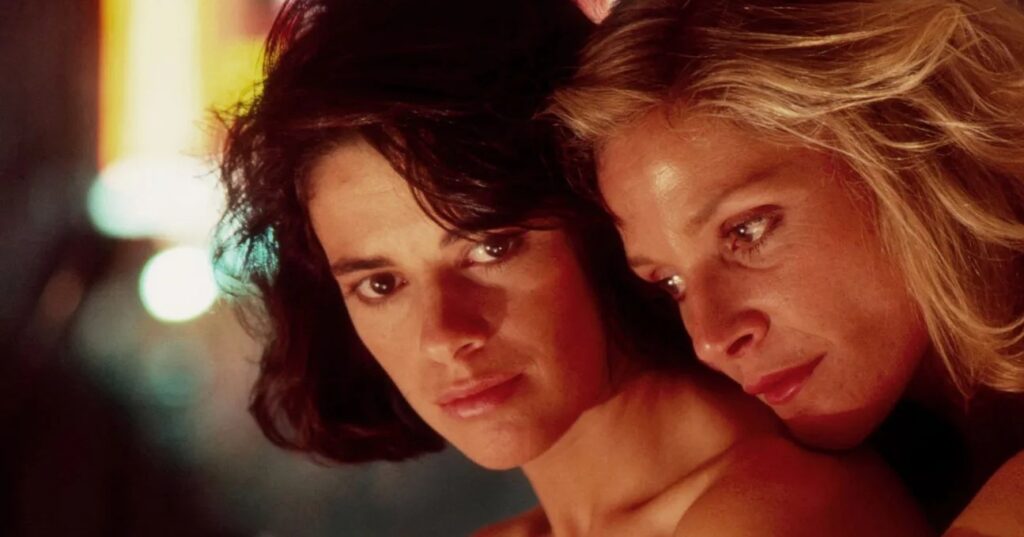
— A “definitive list of the best romantic comedies made in the 2000s” that doesn’t include Trouble Every Day or Phoenix? Whatever, Harper’s Bazaar — IYKYK. YK?
— Not to be outdone, Buzzfeed, despite laying off 35% of their employees, (what can’t Byron Allen do? OK, wait, stop: it’s a rhetorical question), offers their own list of “the best 75 rom-coms ever made,” beginning unpromisingly with You, Me & Tuscany, but coming through in the stretch with great examples like Down with Love, The Apartment (also, as you might imagine, a highlight of Ms. Smith’s Criterion piece) and (swoon) Roman Holiday.
— Finally, one more quite superlative list: Collider’s 10 most perfect romantic movies of the last 40 years, ranked. An impressive selection (Cinema Paradiso notwithstanding) ranging from Brokeback Mountain to Edward Yang’s devastating A Brighter Summer Day, with the latter’s four hour length and heartbreaking conclusion maybe not making it an ideal date movie. That said, it is, in many ways, a love story.
#readings #TheOdyssey #christophernolan #joycecaroloates #links #top10 #romanticfilms #cineconnections #filmlovers #moviedate #datemovie #dating #singles