Love Hurts: Romance in Film Noir
For our second guest film critic blog post, CineConnections® is delighted to present Farran Smith Nehme, aka the Self-Styled Siren. You ask us, there isn’t a more knowledgeable writer on the subject of Hollywood films pre-1960 (though, as she points out, she isn’t “high-hat” about it), nor one whose erudite reflections are more fun to read. We’ve invited her to draw upon her expertise on the subject of that most romantic of film genres: film noir, with a list of amorous examples from both past and present, and the numerous streaming platforms where you can view them.
Most cinephiles have no trouble telling you what film noir is, or at least, what it looks and feels like—the nighttime shadows, bare bulbs and smoky air of its cinematography, the desperation of the characters and the harsh snap of its dialogue.
None of this seems especially conducive to a romance, yet film noir is rife with people in love.
It’s just that the people in these films have about as much luck with love as they do with anything else—in other words, virtually none. A romantic comedy ends with a marriage, or the prospect of one, because the audience feels assured that the two lovers are made for each other. A romantic noir might end in such a way, but it’s just as likely to wind up with one partner dead, or under arrest, or betrayed in the worst way possible. Because a noir protagonist is often defined by bad decisions, and let’s face it, we can all make bad decisions when it comes to animal chemistry.
Here you’ll find an assemblage of film noir, from the 1940s and early 1950s when passion was a common plot element. Noir romance will leave you with heartache as the credits roll, should death or the long arm of the law tear the lovers apart. But beware: Love in a film noir can give a pang even if the couple winds up together. After all, there are no guarantees in this rotten world.
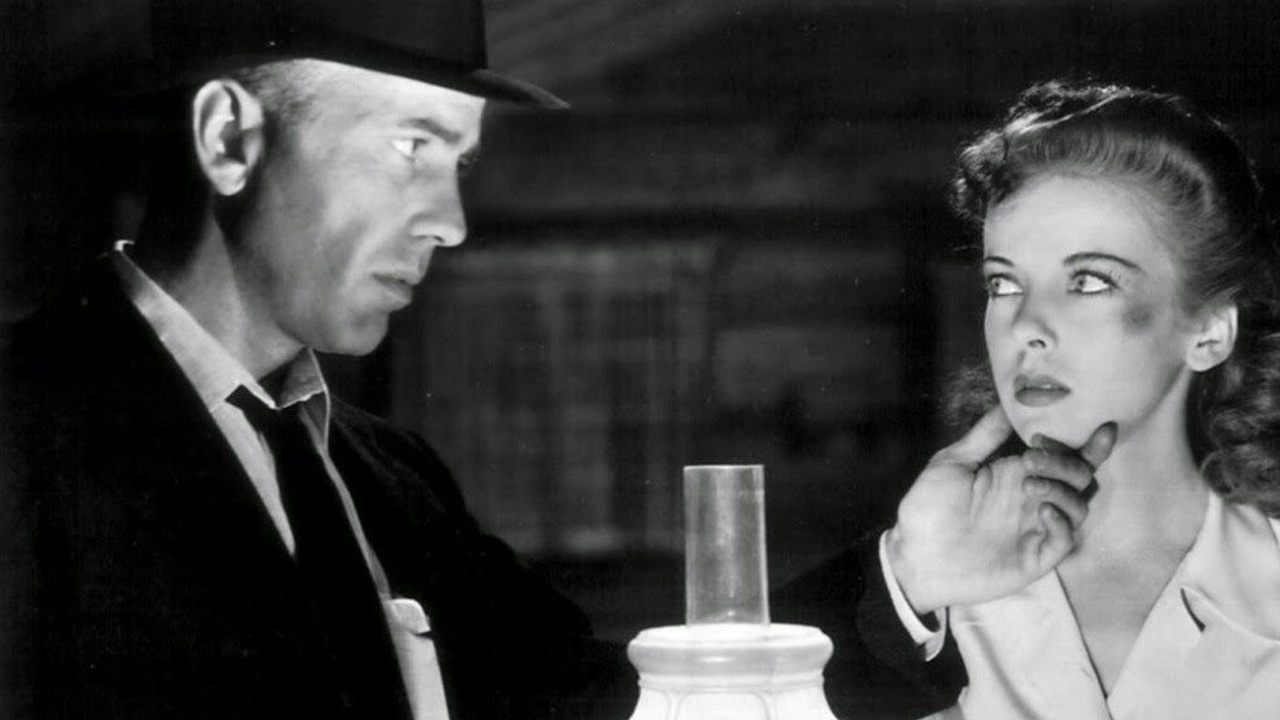
High Sierra (1941)
YouTube, Apple, Amazon, Fandango
Marie: You don’t love her anymore, do you?
Roy: No. If you weren’t sure of it, you wouldn’t have asked me.
John Dillinger was made for Hollywood—a flashy Depression-era bank robber who, legend had it, spent his last hours on earth at the movies, his lover Polly on one arm and a beautiful “lady in red” on the other. This classic film noir, based on W.R. Burnett’s novel and directed by Raoul Walsh from a script by Burnett and John Huston, takes the fictional Roy Earle (Humphrey Bogart) out of Dillinger’s city surroundings and sets him in the rugged mountains of the title. There Roy becomes infatuated with Joan Leslie’s Velma, who seems to be a sweet young girl with a limp. But Roy discovers that the “good” girl is shallow and selfish, and the one offering true love and devotion, right up to the end, is the “bad” girl Marie, played by Ida Lupino.
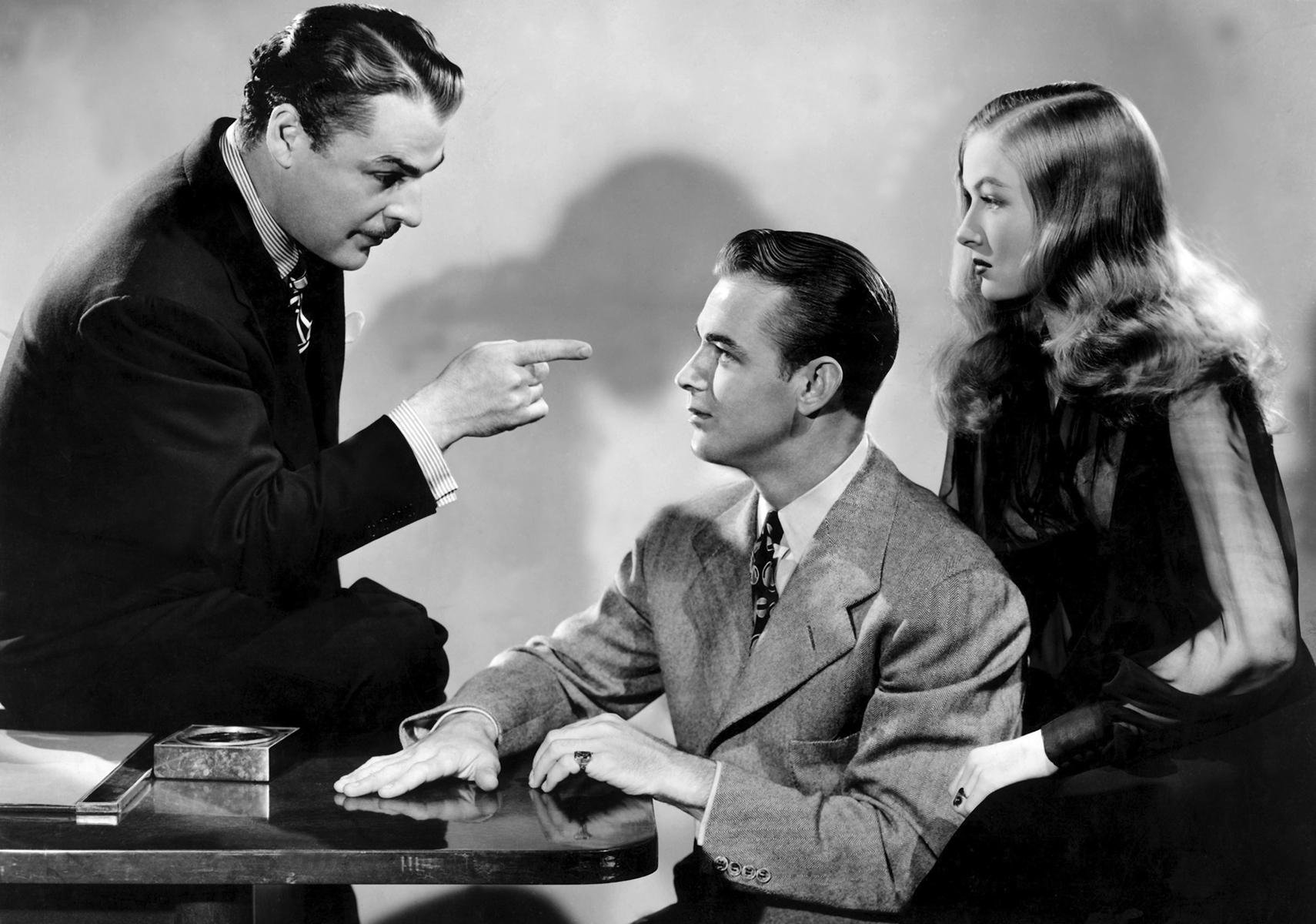
The Glass Key (1942)
Internet Archive
I just met the swellest dame… She smacked me in the kisser.
They only made four films together, but Alan Ladd and Veronica Lake were one of the most charismatic teams of the 1940s. Ladd, cool and reserved, perfectly offset the insinuating, throaty-voiced allure of Lake. This Stuart Heisler film, based on the novel by Dashiell Hammett, was their second outing. The typically convoluted plot starts with Lake’s character involved with Ladd’s boss, but as soon as these two meet, it’s obvious where the real heat will be coming from.
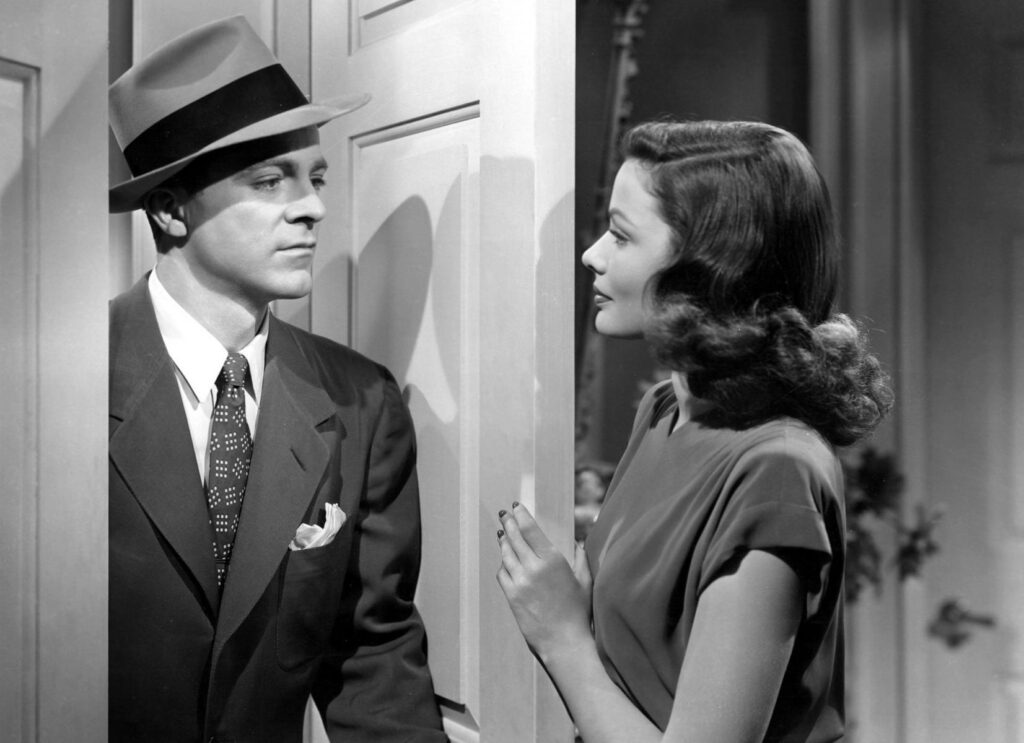
Laura (Otto Preminger, 1944)
YouTube, Apple, Amazon, Fandango
You’d better watch out, McPherson, or you’ll finish up in a psychiatric ward. I doubt they’ve ever had a patient who fell in love with a corpse.
Film noir is usually thought of as a seedy, down-market genre, but here we have the Manhattan literati and glitterati, drifting around the penthouses, downing martinis and stabbing each other with poisoned bon mots. Waldo Lydecker (a career-defining performance by Clifton Webb) is an acid-tongued radio columnist; Gene Tierney is Laura, the gorgeous woman that Waldo mentored. Unfortunately, as the film begins, Laura is a not-at-all gorgeous corpse, and cop McPherson (Dana Andrews) arrives to investigate her murder, becoming more enchanted with Laura the more he finds out. This, as Waldo points out above, could lead to considerable problems.
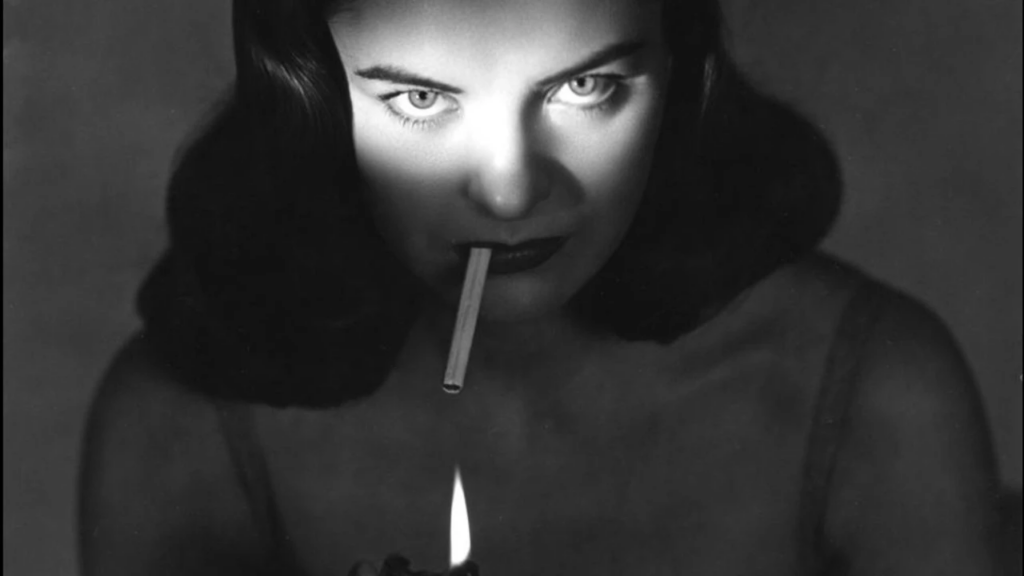
Phantom Lady (1944)
YouTube, Apple, Amazon, Fandango
He hated to let anyone know how soft he really was. But he didn’t fool me. And now they’ve made him bitter and hard. And he’s not that way. You know that!
Gorgeous Ella Raines made her name in this one, but she’s the opposite of the femme fatale. As Carol “Kansas” Richman, she’s the femme héroïque, plunging into a nighttime underworld of jazz clubs (and a memorably erotic drum solo) to save the man she loves, played by Alan Curtis, from the electric chair. Along the way she encounters noir stalwarts including Thomas Gomez, Elisha Cook Jr., and a memorably deranged Franchot Tone.
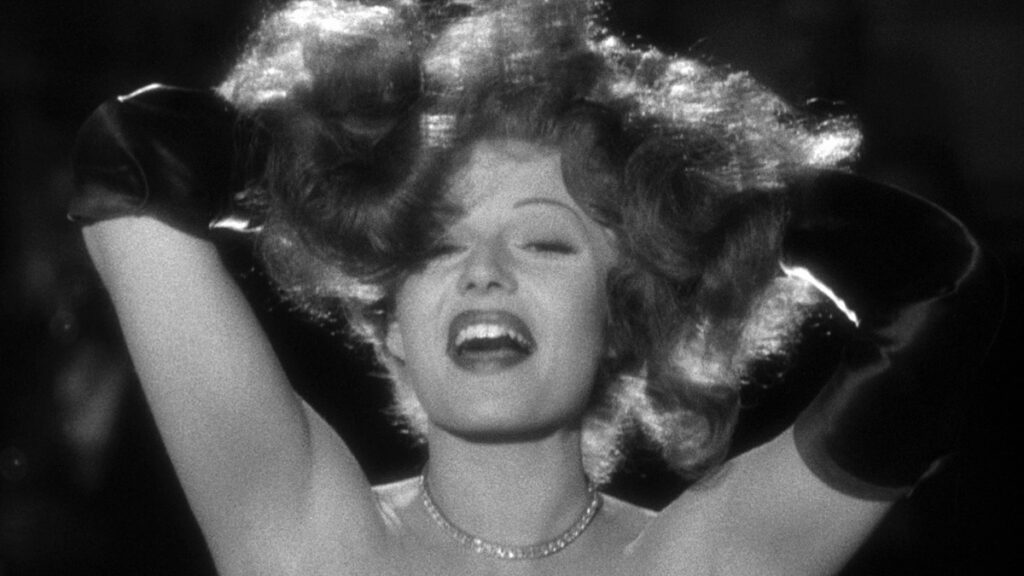
Gilda (Charles Vidor, 1946)
Tubi, Apple, Amazon, Fandango
Hate is a very exciting emotion. Haven’t you noticed? Very exciting. I hate you too, Johnny. I hate you so much I think I’m going to die from it.
The title role of this Charles Vidor–directed noir is to this day the one most associated with the dazzling Rita Hayworth. As Gilda, she’s the apex of a triangle that also includes George Macready as her sinister husband, and Glenn Ford as her seethingly jealous ex-lover. The climax of all these twisted emotions is Hayworth’s suggestive performance of “Put the Blame on Mame,” which did for black strapless gowns what Marilyn Monroe and a subway grate did for white halters.
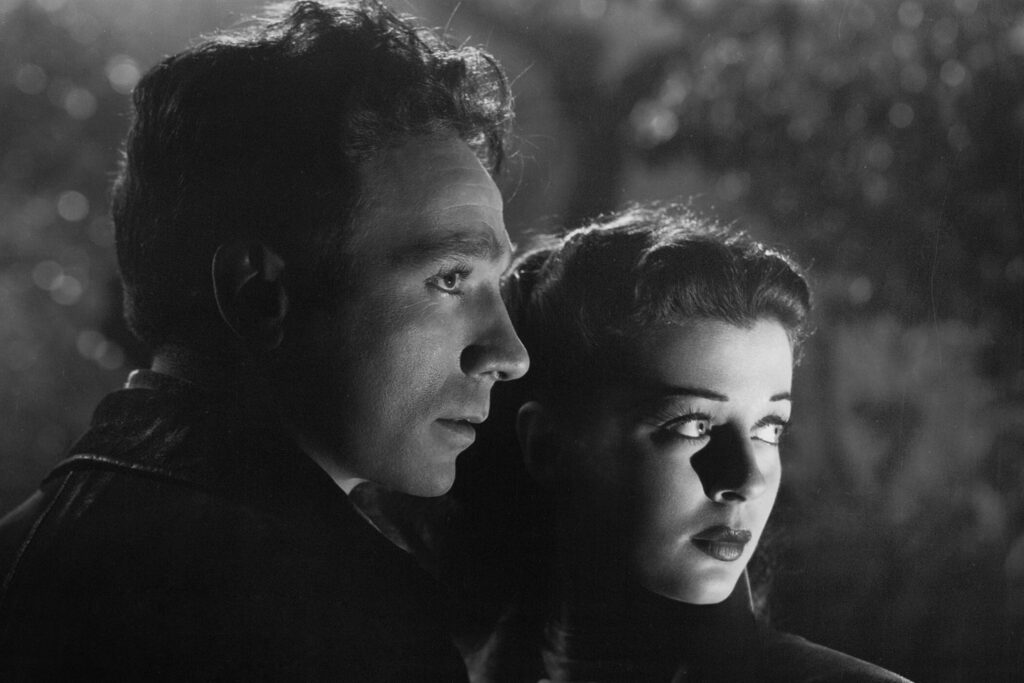
Moonrise (Frank Borzage, 1948)
YouTube, Internet Archive
Sometimes, murder is like love. It takes two to commit it: The man who hates and the man who’s hated. The killer and the killed.
Frank Borzage was a director far more associated with love stories than crime pictures, but this late-career masterpiece managed both. Danny (Dane Clark) is the son of a man hanged for murder, marking Danny for special torment from the narrow-minded denizens of his small town. Pushed to the brink, one night Danny kills his worst bully in self-defense—and finds himself falling in love with the dead man’s fiancée (Gail Russell). In addition to its surprisingly tender love story, Moonrise is the rare film noir that offers hope of redemption.
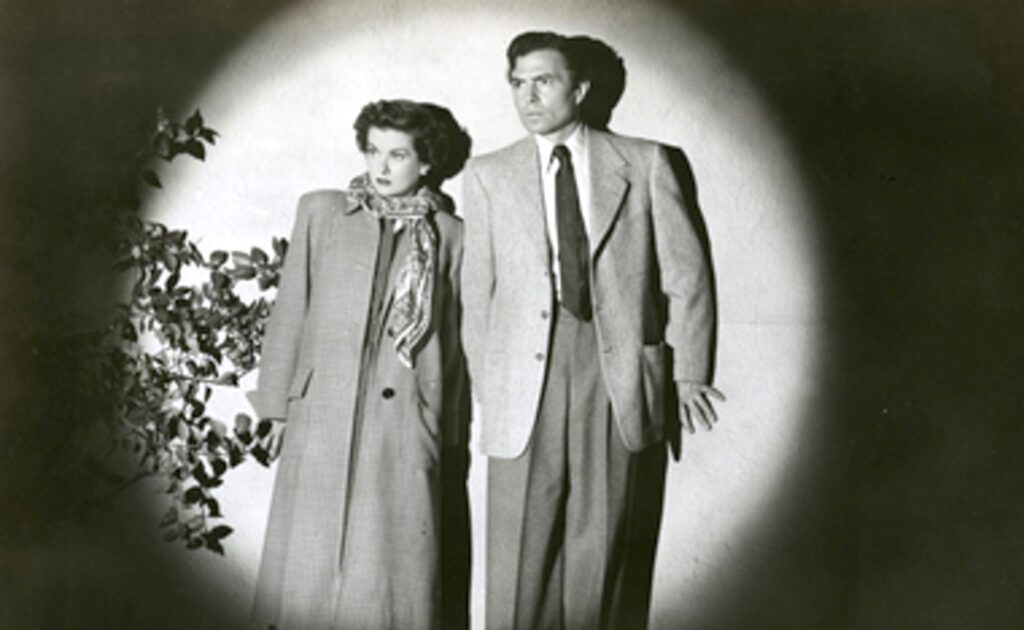
The Reckless Moment (1949)
BFI Player, Tubi, Internet Archive
Donnelly: She’s lucky to have a mother like you.
Lucia: Everyone has a mother like me. You probably had one, too.
Los Angeles housewife Lucia Harper (Joan Bennett) has her life upended when she tries to cover up a crime that could send her daughter Bea to prison for murder. Worse, Bea’s actions lead to Lucia being blackmailed by Donnelly (James Mason), the enforcer for a local loan shark. But as Lucia tries to come up with the money, Donnelly seems curiously unhurried, as long as he can spend time with her. This is noir domestic from the great French director Max Ophuls, and perhaps the least obviously romantic film on this list—until its true nature becomes clear, along with Donnelly’s feelings.
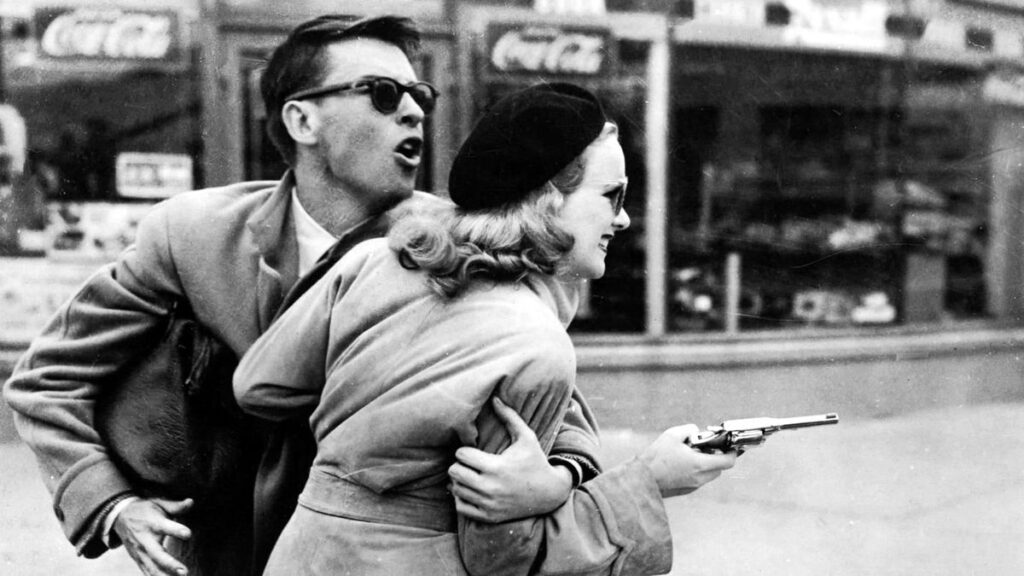
Gun Crazy (Joseph Lewis, 1950)
Tubi, YouTube, Apple, Amazon, Fandango
Bart, I’ve been kicked around all my life, and from now on, I’m gonna start kicking back.
Folie à deux—literally, crazy for two—finds brilliant expression in this Bonnie and Clyde variation, one of the best crime movies ever made in Hollywood. The folie that binds circus sharpshooter Laurie (Peggy Cummins) and former Army instructor Bart (John Dall) is as American as cherry pie: guns. Bart desperately loves Laurie; she in turn loves Bart as much as she’s capable, but no more than she loves money. They’re plainly doomed, but perhaps no more so than the society that spawned them.
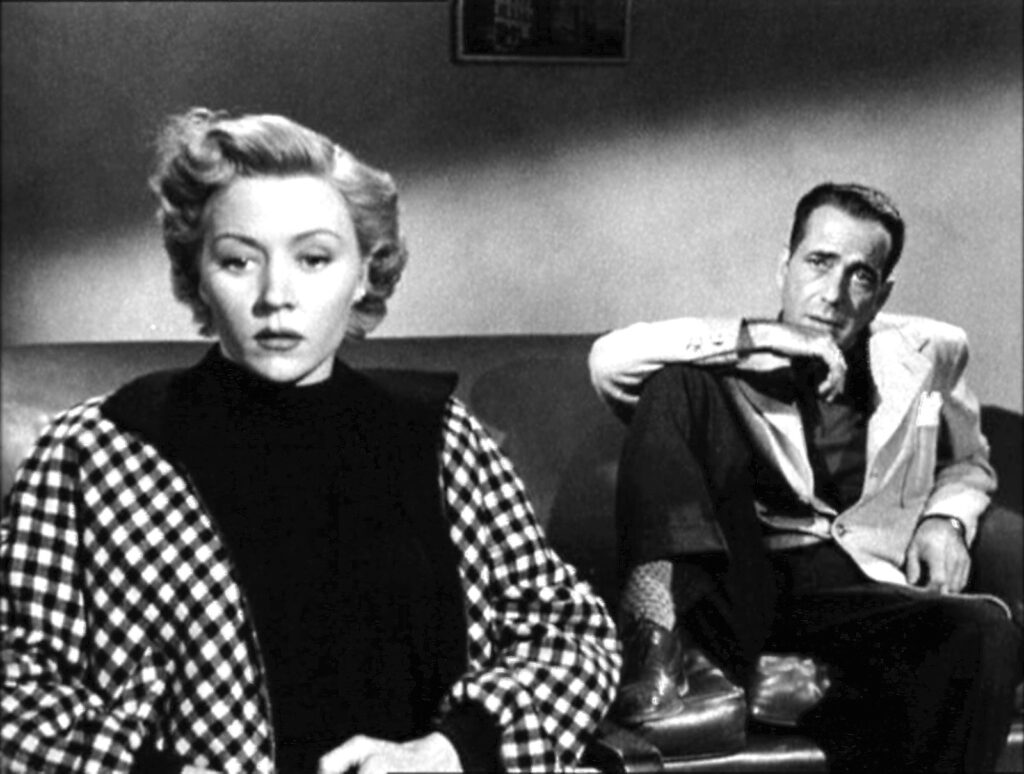
In a Lonely Place (Nicholas Ray, 1950)
Tubi, YouTube, Apple, Amazon, Fandango
I was born when she kissed me, I died when she left me, I lived a few weeks while she loved me.
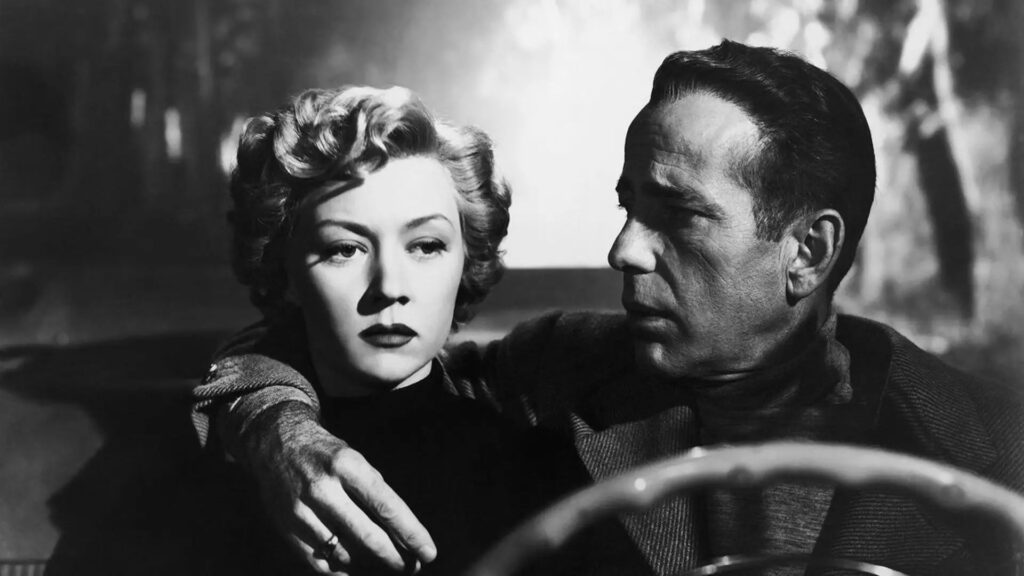
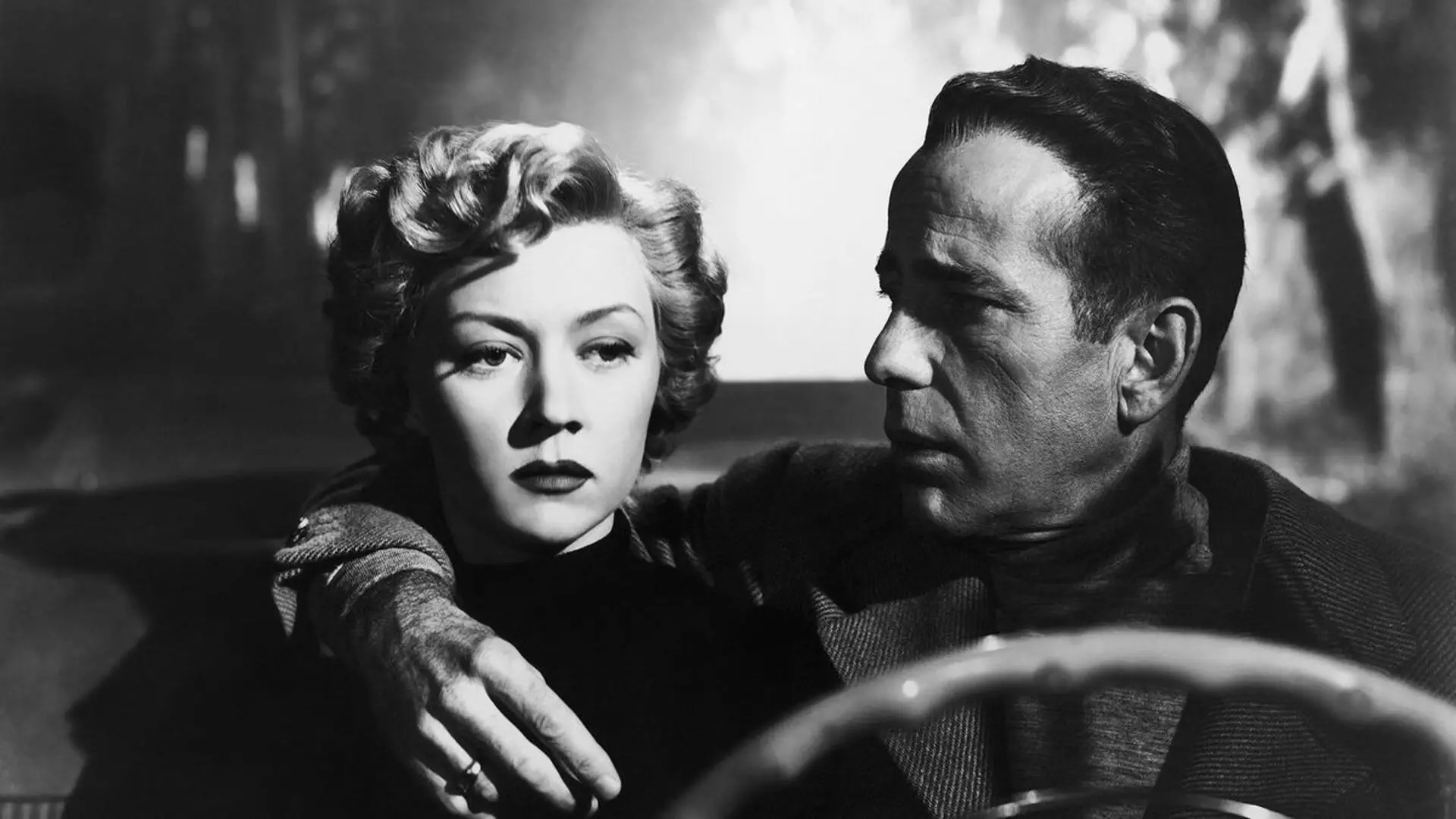
No director associated with film noir was more of a romantic than Nicholas Ray. Witness this film, based on a superb novel by Dorothy B. Hughes that puts the reader in the mind of what we’d now call a serial killer. But with Ray’s continuous input, screenwriter Andrew Solt swerved away from the basic material, into a story about screenwriter Dix Steele (Humphrey Bogart, in one of his finest performances), a man with dark impulses he struggles to control. But is he truly a killer? Film noir goddess Gloria Grahame plays Laurel, the failed actress who falls in love with Dix and wants to save him; but he may not be saveable. Filmed as Ray and Grahame’s own marriage was unraveling, this is the most dreamy and tragic of all noir love stories, with that famous line above acting as a leitmotif.
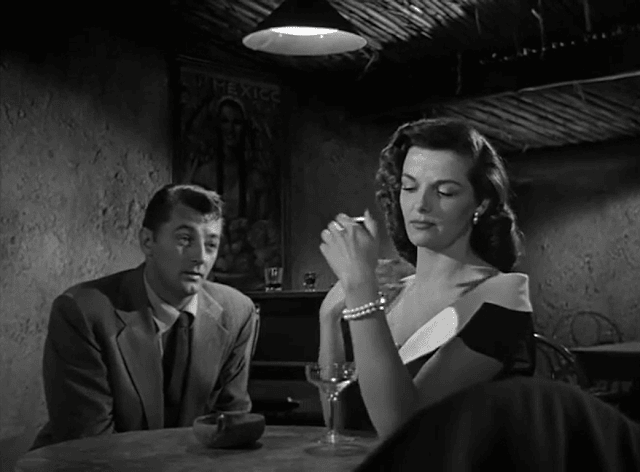
His Kind of Woman (John Farrow, 1951)
YouTube, Apple, Amazon, Fandango
Lenore: I think you’re the strangest man I ever knew.
Dan: What makes you think you know me?
This chaotic yet delightful film, concerning shadowy gangsters, a gambler (Robert Mitchum) and one glorious showgirl (Jane Russell) converging on a Mexican resort, boasts a plot that’s confusing even by noir standards. And that’s before Vincent Price shows up to steal everything but the swimming pool as hambone movie star Mark Cardigan. The film was heavily affected by reshoots and tinkering from Howard Hughes, RKO’s then–studio head. Hughes no more knew what he wanted from a movie than he did from the dozens of women he dated, which makes the title almost an in-joke. But if you like your noir on the lighter side, the banter between Mitchum and Russell is a pleasure, as is the near-screwball denouement.
And, because love never dies, four romantic neo-noirs:
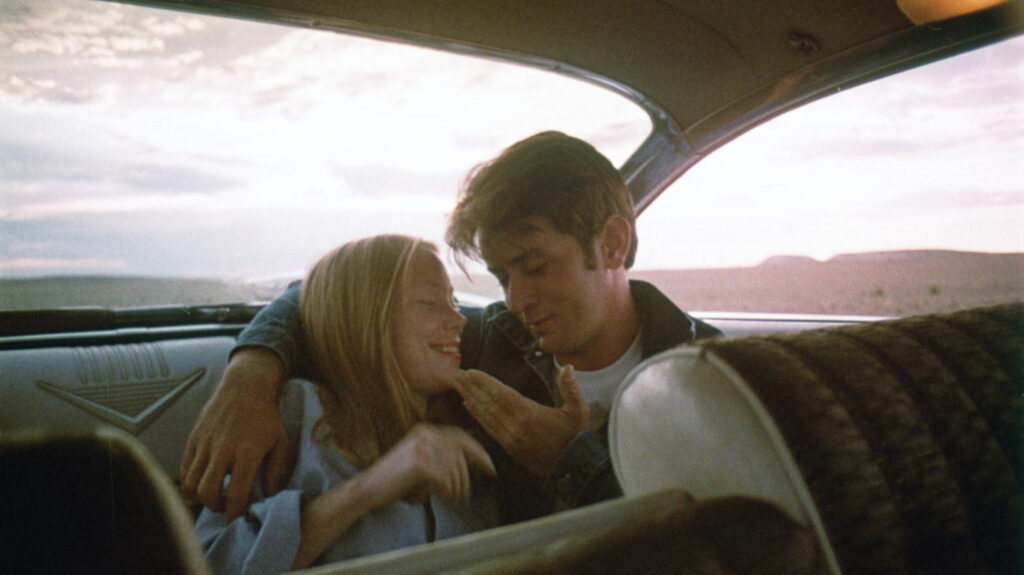
Badlands (Terrence Malick, 1973)
Apple, Amazon, Fandango
Terrence Malick’s legendary debut is loosely inspired by the real-life spree killer Charles Starkweather and his maybe-willing accomplice Caril Fugate. In Malick’s vision, the empty, echoing beauty of the Great Plains forms the backdrop to the haunting story about the love between two remorseless killers. One of the most frequently imitated neo-noirs ever made.
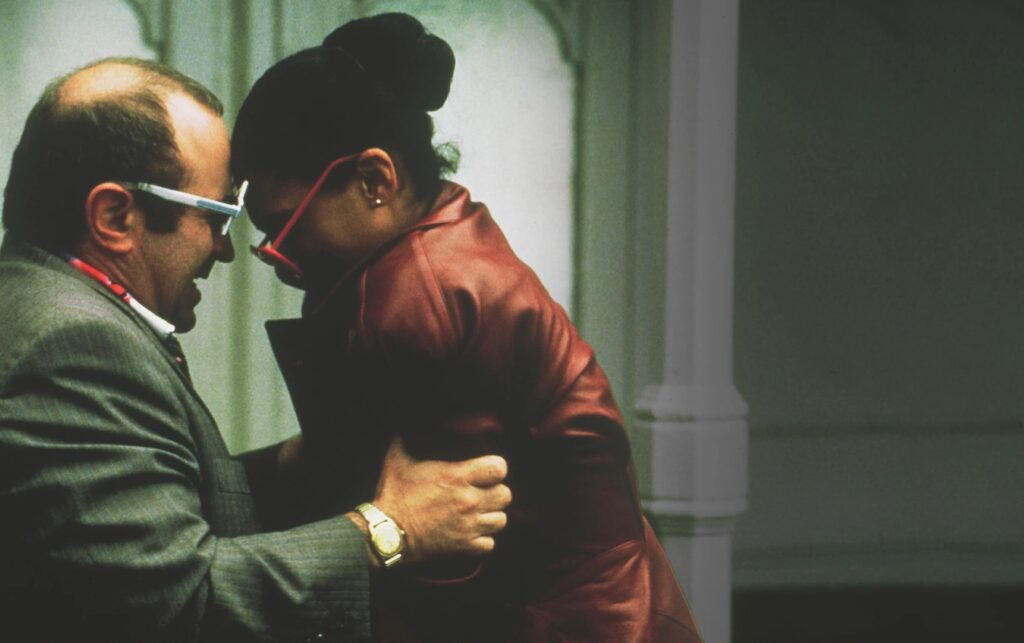
Mona Lisa (Neil Jordan, 1986)
HBO Max, Hulu, Amazon, YouTube, Roku
Set in grim corners of London far from the tourist haunts, Bob Hoskins stars as George, a tough but lonely ex-con; he falls in love with an unattainable beauty (Cathy Tyson), who has her own romantic agenda. With a brilliant Michael Caine as the remorseless mob boss pushing George to a life-or-death choice.
True Romance (Tony Scott, 1993)
Amazon, Apple, Fandango
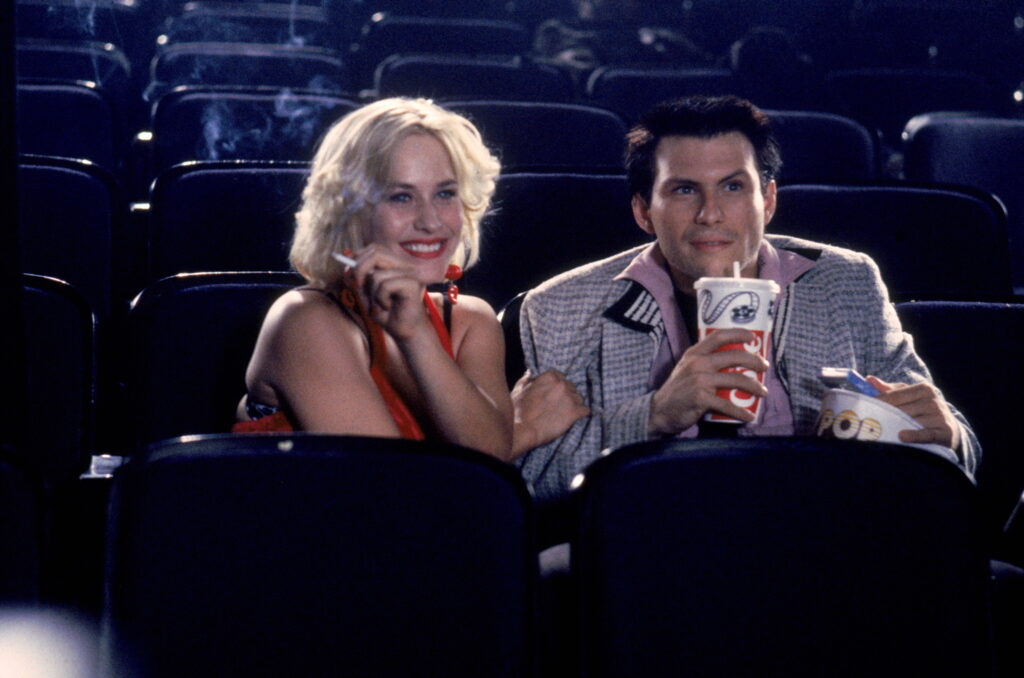
Directed by Tony Scott from a screenplay by Quentin Tarantino, this one virtually begins where most romantic comedies end: with a wedding, that of Alabama Whitman (Patricia Arquette) and Elvis superfan Clarence Worley (Christian Slater). But from there, the road to marital bliss, or even basic safety, runs less than smoothly through gangsters, drug deals, and some creative (and harrowing) violence.
Bound (The Wachowskis, 1996)
Amazon, Apple, Fandango, Kanopy
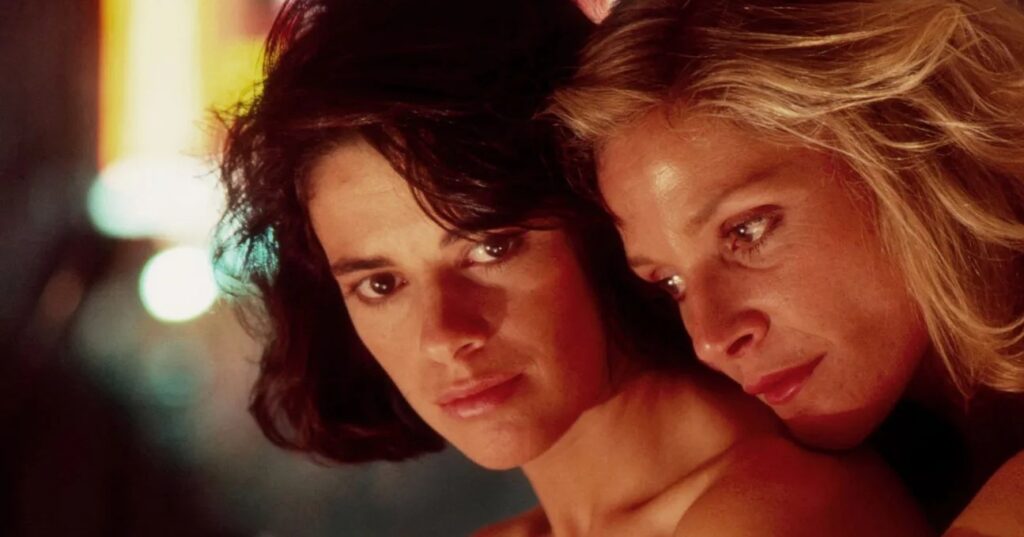
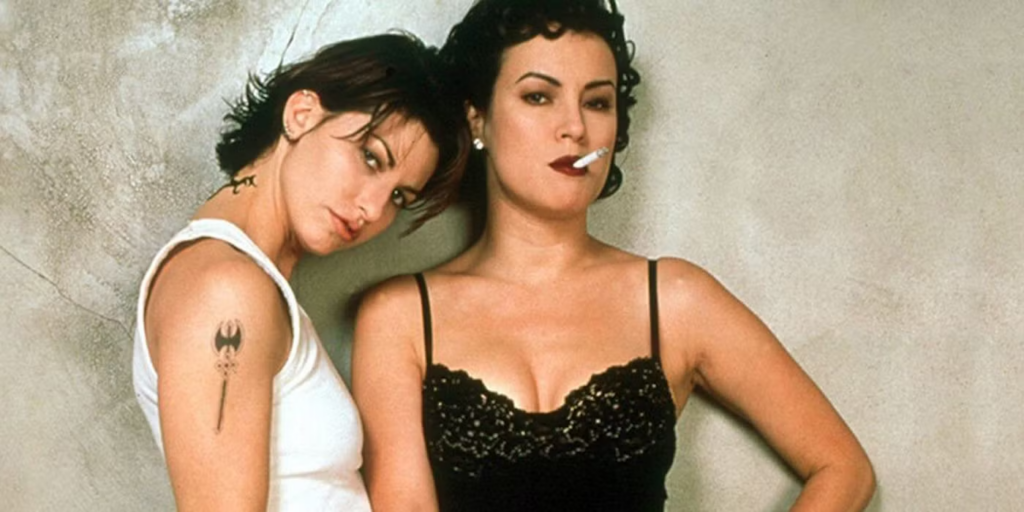
Lana and Lilly Wachowski, in their debut, deftly translate a vintage noir set-up—stealing money from the mob—into a white-hot lesbian romance that would have been unfilmable in the classic era. Gina Gershon has the tough ex-con role that might once have gone to Mitchum or Bogart; Jennifer Tilly as the gangster’s moll delivers a cross between Jane Russell and Marilyn Monroe. What results is a classic in its own right.
Is your love life in need of better direction? Sign up for CineConnections®, the film lovers dating app.
#filmnoir #farransmithnehme #selfstyledsiren #romanticfilms #cineconnections #filmlovers #moviefans #dating #singles

Farran Smith Nehme
Farran Smith Nehme has written about film and film history for Sight and Sound, The Wall Street Journal, The Criterion Collection, and elsewhere, as well as for her Substack newsletter, Self-Styled Siren.